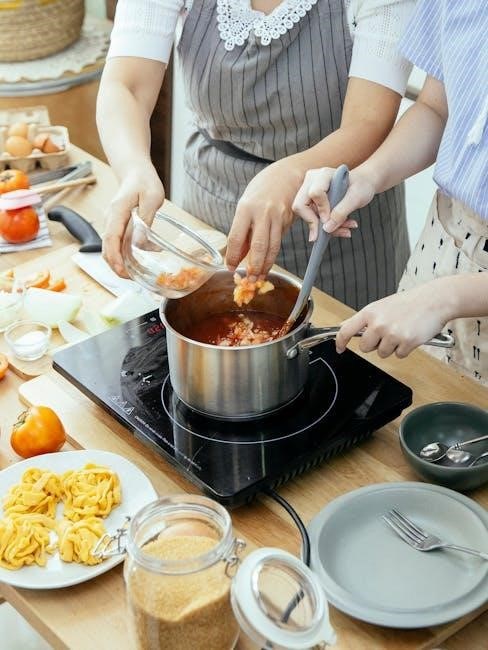
Pressure cooking dramatically reduces cooking times, simplifying meal preparation for busy cooks, offering flavorful results with ease and efficiency in the kitchen․
What is a Pressure Cooker?
A pressure cooker is a sealed pot that cooks food quickly using steam created by increased pressure․ This ingenious kitchen tool traps steam, raising the boiling point of water well above its normal temperature – typically to 250°F (121°C)․
This higher temperature significantly accelerates cooking times, often reducing them by as much as 70%! Modern pressure cookers boast advanced safety features, making them a reliable and efficient method for preparing a wide variety of dishes․
Benefits of Using a Pressure Cooker
Pressure cookers offer numerous advantages for cooks! They drastically cut cooking times, saving energy and effort․ Foods retain more nutrients due to shorter exposure to heat and water․
They’re ideal for tough cuts of meat, transforming them into tender, flavorful meals․ Pressure cooking simplifies complex recipes, and reduces kitchen heat, making it perfect for warmer months․ It’s a versatile tool for soups, stews, and more!

Types of Pressure Cookers
Pressure cookers come in two main types: stovetop, relying on direct heat, and electric (like Instant Pots), offering pre-set programs and convenience․
Stovetop Pressure Cookers
Stovetop pressure cookers are the traditional style, functioning directly on your cooktop’s heat source․ Kuhn Rikon and T-fal are renowned brands offering durable stainless steel or aluminum construction․ They require manual heat adjustment and pressure monitoring, demanding attentive cooking․ These cookers are generally more affordable and offer excellent control for experienced cooks, but necessitate understanding pressure levels and release methods for safe and effective operation․ They are versatile for various stovetops, providing consistent results with practice․
Electric Pressure Cookers (Instant Pots)
Electric pressure cookers, like Instant Pots, offer pre-programmed settings and automated operation, simplifying the cooking process․ They boast built-in safety features and eliminate the need for manual heat adjustment․ These versatile appliances often function as slow cookers, rice cookers, and more․ While potentially pricier upfront, they provide convenience and consistent results, making them ideal for beginners or those seeking hands-off cooking․ They are incredibly popular for their ease of use and multi-functionality․
Essential Pressure Cooker Features
Key features include robust safety mechanisms, durable material choices like stainless steel, and appropriate size and capacity for your cooking needs․
Safety Mechanisms
Modern pressure cookers boast multiple safety features, crucial for confident cooking․ These include locking lids preventing accidental opening under pressure, pressure release valves regulating internal pressure, and safety locks preventing over-pressurization․ Understanding these mechanisms is paramount․ Always inspect seals and valves before each use, ensuring they are clean and functioning correctly․ Proper venting is vital; never force open a cooker while pressurized․ Prioritizing these safety aspects guarantees a secure and enjoyable cooking experience․
Material (Stainless Steel vs․ Aluminum)
Pressure cookers commonly feature stainless steel or aluminum construction․ Stainless steel offers durability, resistance to reactivity with acidic foods, and ease of cleaning, though it heats slower․ Aluminum is lightweight, heats rapidly, and is generally more affordable, but can react with certain foods․ Many cookers utilize a tri-ply construction – layering aluminum between stainless steel – combining both benefits․ Consider your cooking style and budget when selecting the ideal material for your needs․
Size and Capacity
Pressure cooker size is crucial; consider household size and typical meal portions․ Smaller 3-6 quart models suit individuals or couples, while 6-8 quart cookers are ideal for families․ Larger 8+ quart options are best for batch cooking or preparing meals for gatherings․ Avoid overfilling – generally, don’t exceed two-thirds capacity for optimal, safe operation and proper pressure build-up․
Getting Started: Basic Operation
Proper operation involves adding liquids, sealing the lid securely, selecting pressure levels, and understanding release methods for safe and delicious results․
Understanding Pressure Levels
Pressure cookers utilize varying pressure levels to adjust cooking speed; lower pressure is ideal for delicate foods like vegetables and grains, preventing mushiness․ Higher pressure significantly reduces cooking time for tougher ingredients such as meats and beans․
Understanding your cooker’s settings – often indicated by weight or a dial – is crucial․ Always consult recipes for the recommended pressure level to achieve optimal texture and flavor, ensuring safe and successful cooking every time․
Water and Liquid Requirements
Adequate liquid is essential for pressure cooking, creating the steam that builds pressure and cooks food evenly․ The minimum liquid requirement varies by cooker and recipe, typically ranging from one to two cups․ Insufficient liquid can cause burning, while excessive liquid may dilute flavors․ Always follow recipe guidelines, and remember that foods releasing liquid, like vegetables, contribute to the overall volume․
Natural Pressure Release vs․ Quick Release
Pressure release methods impact food texture․ Natural Pressure Release (NPR) allows the pressure to subside gradually, ideal for soups and stews, preventing splattering․ Quick Release (QR) rapidly vents steam, suitable for vegetables or when further cooking isn’t desired․ QR can sometimes cause foaming, so follow recipe instructions carefully for optimal results and safety․
Indian Chicken Recipes for Pressure Cookers
Pressure cookers excel at creating tender, flavorful Indian chicken dishes – from rich curries and biryanis to comforting soups and stews, quickly!
Chicken Curry Recipes
Indian chicken curries, renowned for their complex spice blends and rich sauces, are perfectly suited for pressure cooking․ This method significantly reduces simmering time while intensifying flavors, resulting in incredibly tender chicken․ Explore diverse regional variations, from the creamy Butter Chicken Masala to the fiery Chettinad Chicken, all achievable with ease․ Pressure cooking ensures consistent results, making these flavorful dishes accessible for weeknight meals or special occasions․ Discover a world of aromatic curries, simplified and enhanced by the power of pressure!
Biryani and Rice Dishes
Biryani, a fragrant and flavorful mixed rice dish, benefits immensely from pressure cooking․ This technique ensures perfectly cooked, fluffy rice and tender chicken infused with aromatic spices․ Pressure cooking streamlines the layering process and drastically reduces cooking time, delivering a restaurant-quality biryani at home․ Explore variations like Hyderabadi or Lucknowi styles, achieving consistent results with ease․ Beyond biryani, pressure cookers excel at preparing other rice dishes, offering convenience and exceptional flavor․
Chicken Soup and Stews
Pressure cookers are ideal for crafting deeply flavorful chicken soups and stews in a fraction of the time․ Tough cuts of chicken become incredibly tender, melding beautifully with vegetables and aromatic herbs․ The sealed environment intensifies flavors, creating rich, comforting broths․ From classic chicken noodle soup to hearty Indian-spiced stews, pressure cooking delivers exceptional results with minimal effort, perfect for cozy weeknight meals or comforting sick-day remedies;
Specific Chicken Recipe Examples
Explore diverse flavors! Discover recipes like Butter Chicken Masala, Chettinad Chicken, and simple curries – all easily adapted for quick, delicious pressure cooking․
Butter Chicken Masala
Butter Chicken Masala, a beloved classic, transforms beautifully in a pressure cooker․ Marinate chicken in yogurt and spices, then sauté with ginger, garlic, and tomatoes․ The pressure cooker tenderizes the chicken while intensifying flavors․ Finish with butter and cream for a rich, decadent sauce․ This method significantly reduces cooking time, delivering restaurant-quality results with minimal effort․ Serve with naan or rice for a complete and satisfying Indian meal․ Enjoy this simplified, yet authentic, version!
Chettinad Chicken
Chettinad Chicken, known for its bold and spicy flavors, is remarkably well-suited for pressure cooking․ This South Indian specialty utilizes a complex blend of roasted spices, creating a deeply aromatic and flavorful dish․ The pressure cooker ensures the chicken becomes incredibly tender while melding the spices beautifully․ Serve with rice or parotta to balance the heat․ Experience authentic Chettinad cuisine with this streamlined, efficient recipe – a true taste of India!
Simple Chicken Curry
Simple Chicken Curry is a fantastic entry point into Indian cooking, and a pressure cooker makes it even easier! This recipe focuses on core flavors – ginger, garlic, tomatoes, and a blend of common spices – delivering a comforting and satisfying meal quickly․ The pressure cooker tenderizes the chicken beautifully, creating a rich and flavorful curry perfect for weeknights․ Serve with rice or naan for a complete and delicious experience․
Pressure Cooking Times for Chicken
Chicken cooks quickly under pressure; times vary based on cut and quantity, ensuring tender, flavorful results with minimal effort and maximum convenience․
Whole Chicken
Cooking a whole chicken in a pressure cooker is surprisingly efficient․ A 3-4 pound chicken typically requires 25-30 minutes of pressure cooking time at high pressure, followed by a 15-20 minute natural pressure release․ This yields incredibly tender, fall-off-the-bone meat․ Ensure the chicken fits comfortably within the cooker, and sufficient liquid is added – about 1-2 cups – to generate steam․ Season generously before cooking for enhanced flavor, and consider adding aromatics like onions, garlic, and herbs to the cooking liquid for a more complex taste․
Chicken Pieces (Thighs, Drumsticks, Breast)
Pressure cooking chicken pieces – thighs, drumsticks, or breasts – is even faster than a whole chicken․ Thighs and drumsticks generally need 10-15 minutes at high pressure, while boneless, skinless breasts require only 8-10 minutes․ Always allow for a natural pressure release of 5-10 minutes, then quick release any remaining pressure․ Adjust cooking times based on the size and quantity of the chicken pieces, ensuring they reach an internal temperature of 165°F (74°C)․
Safety Precautions
Always avoid overfilling, ensure proper sealing and venting, and regularly maintain your pressure cooker for safe and enjoyable cooking experiences․
Avoiding Overfilling
Overfilling a pressure cooker is a significant safety hazard, potentially blocking the vent and causing excessive pressure buildup․ Always adhere to the manufacturer’s maximum fill line, typically indicated inside the pot – usually no more than two-thirds full for most foods․ Remember that liquids expand during the cooking process․ For foods that expand, like beans or grains, fill only halfway․ Ignoring these guidelines can lead to dangerous splattering or even a cooker malfunction, compromising safety and creating a mess․
Proper Sealing and Venting
Ensuring a proper seal is crucial for safe pressure cooking; the lid must lock securely onto the pot, creating an airtight environment․ Before heating, verify the sealing ring is correctly positioned and undamaged․ Understand your cooker’s venting procedures – initial steam release before pressure builds, and controlled release methods (natural or quick) after cooking․ Never force the lid open while pressure remains; always allow complete depressurization to avoid injury and ensure safe operation․
Maintenance and Cleaning
Regular maintenance extends your pressure cooker’s lifespan and ensures optimal performance․ After each use, thoroughly clean the pot, lid, and sealing ring with warm, soapy water․ Inspect the vent and valves for blockages, clearing them as needed․ Avoid abrasive cleaners that could damage surfaces․ Store the cooker with the lid slightly ajar to prevent odors and maintain the sealing ring’s flexibility, guaranteeing continued safe and efficient operation․
Troubleshooting Common Issues
Addressing issues like burning or sealing problems is crucial; ensure sufficient liquid, proper venting, and a clean sealing ring for optimal results․
Food Burning
Food burning within the pressure cooker often stems from insufficient liquid, or ingredients sticking to the bottom․ Always ensure adequate liquid levels are met, as specified in your recipe, to create sufficient steam․ Stirring frequently during the initial stages of cooking can also prevent sticking․
Lowering the heat slightly after pressure is reached can help maintain a gentle simmer, reducing the risk of scorching․ For delicate foods, consider using a trivet to elevate them above the bottom of the pot․ Regularly inspect and clean the cooker to remove any residue that could contribute to burning․
Pressure Not Building
If pressure isn’t building, verify the lid is securely locked and the sealing ring is correctly positioned – a misaligned ring prevents a proper seal․ Ensure the vent is clear of obstructions; a blocked vent hinders pressure accumulation․
Insufficient liquid is another common cause; add more liquid if needed․ Also, check that the heat is set high enough to reach the required pressure level․ A faulty pressure cooker may require professional inspection or replacement․
Lid Not Sealing
A lid failing to seal often stems from an improperly seated sealing ring; ensure it’s clean, flexible, and correctly positioned within the lid’s groove․ Inspect the rim of the pot for any dents or damage that might compromise the seal․
Verify there’s no food debris obstructing the sealing surface․ Sometimes, a slightly loose lid can be resolved by re-aligning and gently tightening, but never force it․
Recommended Pressure Cooker Brands
Kuhn Rikon and T-fal consistently receive high ratings for durability, safety features, and performance, making them excellent choices for home cooks․
Kuhn Rikon
Kuhn Rikon is renowned for its high-quality stovetop pressure cookers, particularly the Duromatic line․ These cookers boast exceptional safety features, including a locking lid and automatic pressure release valve․ Their robust construction, often utilizing stainless steel, ensures longevity and even heat distribution․
Many cooks appreciate Kuhn Rikon’s intuitive design and ease of use, making it a favorite for both beginners and experienced pressure cooking enthusiasts․ The 8․5-quart model is especially popular for family-sized meals․
T-fal
T-fal offers a range of pressure cookers, frequently praised for their affordability and user-friendly design․ The Clipso model, a 6․3-quart option, is a popular choice for those new to pressure cooking or seeking a budget-friendly solution․
T-fal cookers typically feature multiple safety mechanisms and clear markings for easy operation․ While often constructed with aluminum, they provide reliable performance for everyday cooking needs, making them a practical kitchen staple․
Beyond Chicken: Other Indian Dishes
Pressure cookers excel at preparing lentils (dal) and vegetable curries, delivering authentic Indian flavors quickly and efficiently for diverse, delicious meals․
Lentils (Dal)
Indian dals, or lentil dishes, benefit immensely from pressure cooking, transforming hard lentils into creamy textures in a fraction of the usual time․ A pressure cooker ensures even cooking, preserving the nutritional value and intensifying flavors․ From classic dal tadka to more complex regional variations, the pressure cooker simplifies the process, reducing simmering time from hours to minutes․ This allows for quicker weeknight meals without compromising on authentic taste and texture, making it a staple for many Indian households․
Vegetable Curries
Pressure cookers excel at creating flavorful vegetable curries, quickly softening vegetables while locking in their nutrients and vibrant colors․ Complex curries like aloo gobi (potato and cauliflower) or palak paneer (spinach and cheese) become achievable even on busy weeknights․ The reduced cooking time prevents overcooking, ensuring vegetables retain a pleasant texture․ This method is ideal for root vegetables and tougher greens, delivering tender, aromatic curries with minimal effort and maximum taste․
Resources for Recipes and Information
Explore online recipe websites and cookbooks for diverse pressure cooking inspiration, expanding your culinary skills and discovering new flavorful dishes easily․
Online Recipe Websites
Numerous websites offer a wealth of pressure cooker recipes, catering to all skill levels and dietary preferences․ Websites dedicated to Indian cuisine frequently feature pressure cooker adaptations of classic dishes, simplifying complex recipes․ Explore platforms like Allrecipes, Food Network, and BBC Good Food for diverse options․ Many food blogs also specialize in pressure cooking, providing detailed instructions and helpful tips․ Don’t hesitate to search specifically for “Indian pressure cooker recipes” to find authentic flavors made easy!
Cookbooks
Dedicated pressure cooker cookbooks provide curated collections of recipes, often with detailed explanations of techniques and safety guidelines․ Look for titles specifically focused on Indian cuisine for authentic flavors and regional variations․ Cookbooks offer a tactile experience and can be a valuable resource for building confidence in the kitchen․ They frequently include helpful tips for adapting traditional recipes to pressure cooking methods, ensuring delicious results every time․