Temperature Chart Blanket Guide for Horses: A Comprehensive Overview
Navigating equine comfort requires understanding when to blanket; this guide provides a temperature-based chart, considering factors like coat type and climate for optimal horse health.
Understanding the Basics of Horse Blanketing
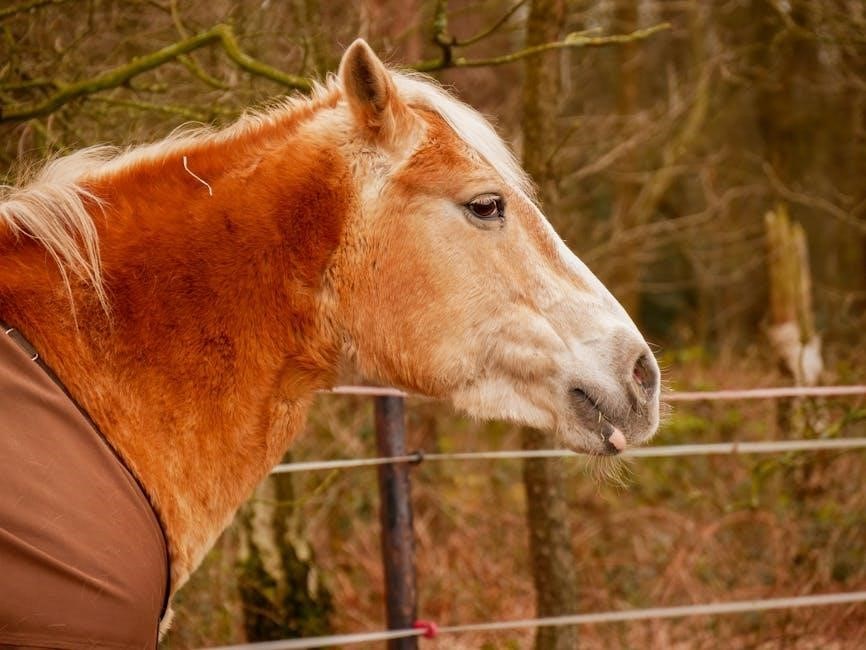
Horse blanketing isn’t a one-size-fits-all solution; it’s a nuanced practice centered around maintaining your horse’s thermal comfort. Understanding a horse’s natural ability to regulate body temperature is key. Horses develop a winter coat for insulation, but factors like age, health, workload, and clipping significantly impact their warmth. Blanketing supplements this natural insulation when needed, protecting against cold, wind, and wet conditions.
Choosing the right blanket involves considering weight (measured in grams or denier) and material (waterproof vs. water-resistant). A proper fit is crucial to prevent rubs and ensure the blanket stays in place. Regularly assessing your horse’s condition and adjusting blanketing strategies based on changing weather patterns is essential for their well-being.
Why Blanket Your Horse? Key Considerations
Blanketing protects horses vulnerable to cold stress, particularly those with limited natural insulation. Senior horses, young foals, and horses with health conditions struggle to maintain body temperature. Clipped horses lose their winter coat, necessitating blanketing even in moderately cold weather; Horses in work may sweat and become chilled, requiring a blanket for recovery.
Beyond warmth, blanketing shields against rain and wind, preventing hypothermia. However, over-blanketing can hinder a horse’s natural thermoregulation and lead to overheating. Careful observation of your horse’s behavior – shivering, sweating, or seeking shelter – is vital to determine if blanketing is truly needed and appropriate for their individual circumstances.
Factors Influencing Blanketing Decisions
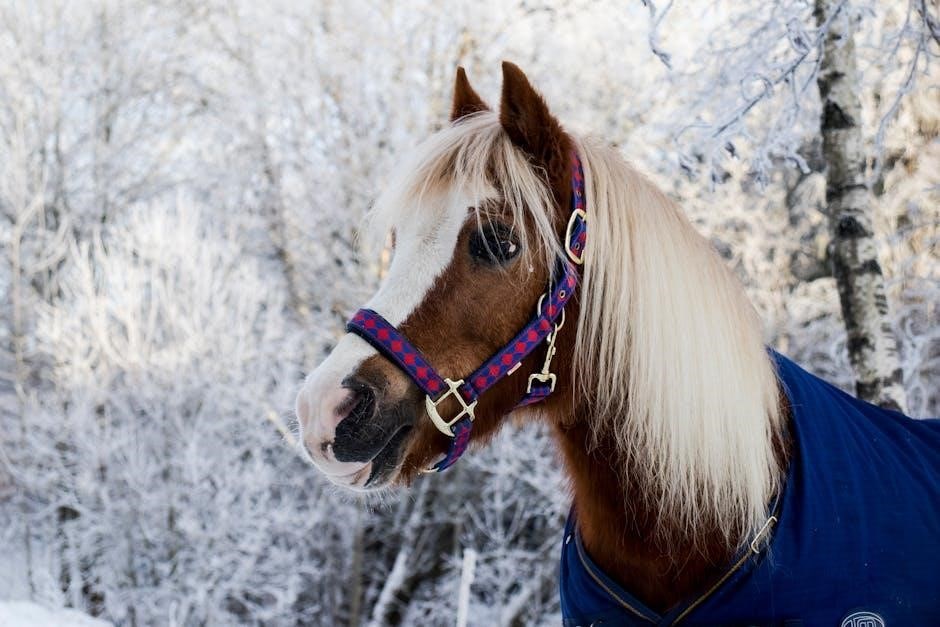
Determining when to blanket involves assessing climate, horse coat, age, health, work level, and whether the horse is clipped—all crucial considerations.
Climate and Regional Variations
Blanketing needs are heavily influenced by geographical location and prevailing weather patterns. Horses in consistently cold, wet climates like the northern US or Canada will require more robust and waterproof blankets compared to those in milder regions.
Southern states might only need a sheet or light blanket during brief cold snaps, while mountainous areas experience fluctuating temperatures demanding adaptable layering. Coastal regions often face dampness, necessitating breathable yet water-resistant options. Understanding microclimates within a region is also vital; valleys can be colder than hillsides.
Consider historical temperature data and anticipate potential weather shifts. Regional variations dictate the necessity for heavier weights, waterproof materials, and the frequency of blanket changes throughout the winter season, ensuring optimal horse comfort and health.
Horse’s Coat Type and Natural Insulation
A horse’s winter coat provides significant natural insulation, impacting blanketing decisions. Horses with thick, dense coats generally require less blanketing than those with thinner coats, like clipped horses or breeds with naturally sparse hair.
Native breeds adapted to cold climates often develop substantial winter coats, offering considerable protection. Conversely, horses originating from warmer regions may struggle in colder temperatures without assistance.
The ability to grow a full winter coat is also affected by age and health. Older or ill horses may not develop adequate insulation. Evaluating the individual horse’s coat thickness and condition is crucial; a fluffy, dense coat indicates greater natural warmth, potentially reducing the need for heavy blanketing.
Age and Health Condition of the Horse
A horse’s age and overall health significantly influence its ability to regulate body temperature, impacting blanketing needs. Senior horses often have reduced metabolic rates and diminished muscle mass, making them less efficient at generating heat. They may require blanketing at warmer temperatures than younger, healthier horses.
Horses with underlying health conditions, such as Cushing’s disease or hypothyroidism, can also struggle to maintain warmth. These conditions can disrupt thermoregulation and impair the growth of a sufficient winter coat.
Illnesses or recent surgeries can compromise a horse’s immune system and energy reserves, increasing their susceptibility to cold stress. Careful monitoring and appropriate blanketing are essential for supporting recovery and preventing complications.
Work Level and Clipping Status
A horse’s workload and whether it’s been clipped dramatically affect its blanketing requirements. Horses in heavy work generate significant body heat through muscle activity and may not need a blanket in temperatures where a less active horse would. Conversely, horses with minimal work will lose heat more quickly.
Clipping removes a horse’s natural insulation, significantly reducing its ability to stay warm. Fully clipped horses, particularly those with light body condition, require blanketing at much lower temperatures than unclipped horses.
Consider the extent of the clip – a full body clip necessitates heavier blanketing than a trace clip. Adjust blanket weight based on the horse’s activity level and the degree of insulation removed by clipping.
The 55°F Rule: A Starting Point
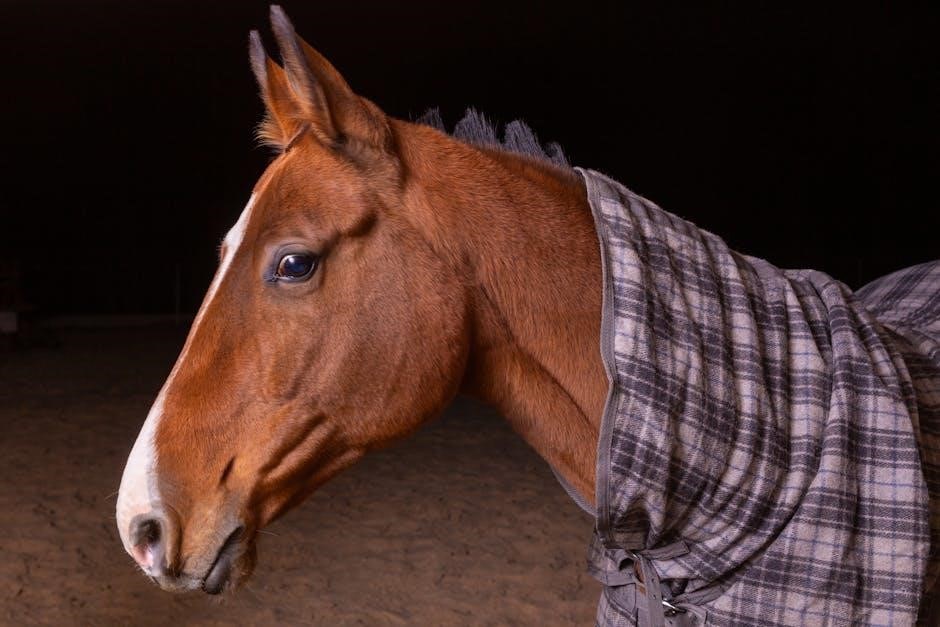
The 55°F guideline serves as a foundational temperature for initiating blanketing, though individual horse needs—considering factors like coat and clip—require adjustments.
Explaining the 55°F Guideline
The widely referenced 55°F rule provides a convenient starting point for determining when to begin blanketing your horse, but it’s crucial to remember it’s not a rigid decree. This temperature represents a threshold where many horses, particularly those with average winter coats, may begin to feel a chill, especially when factoring in wind and moisture.
However, this guideline is merely a suggestion, and experienced horse owners understand the importance of individual assessment. A horse that is actively working, has been recently clipped, or is older and less able to regulate its body temperature will likely require blanketing at temperatures above 55°F. Conversely, a hardy horse with a thick winter coat might not need a blanket until temperatures dip significantly lower.
Therefore, always observe your horse for signs of being cold – shivering, raised hairs, or seeking shelter – and adjust your blanketing strategy accordingly.
Adjusting the Rule Based on Individual Horse Needs
Successfully blanketing hinges on recognizing that the 55°F rule is a generalization; each horse presents unique thermoregulatory needs. Factors like body condition, age, and health dramatically influence a horse’s sensitivity to cold. Senior horses and those with compromised immune systems often require earlier and heavier blanketing than younger, robust individuals.
Furthermore, a horse’s workload significantly impacts its temperature regulation. Horses in heavy work generate substantial heat and may not need a blanket at temperatures where a stalled or lightly worked horse would benefit. Clipping also removes natural insulation, necessitating blanketing at warmer temperatures.
Regularly assess your horse’s comfort level – observe for shivering, bunching of the topline, or seeking shelter – and adjust blanket weight and timing accordingly. Prioritize individual observation over strict adherence to a single temperature threshold.
Horse Blanket Weights and Deniers
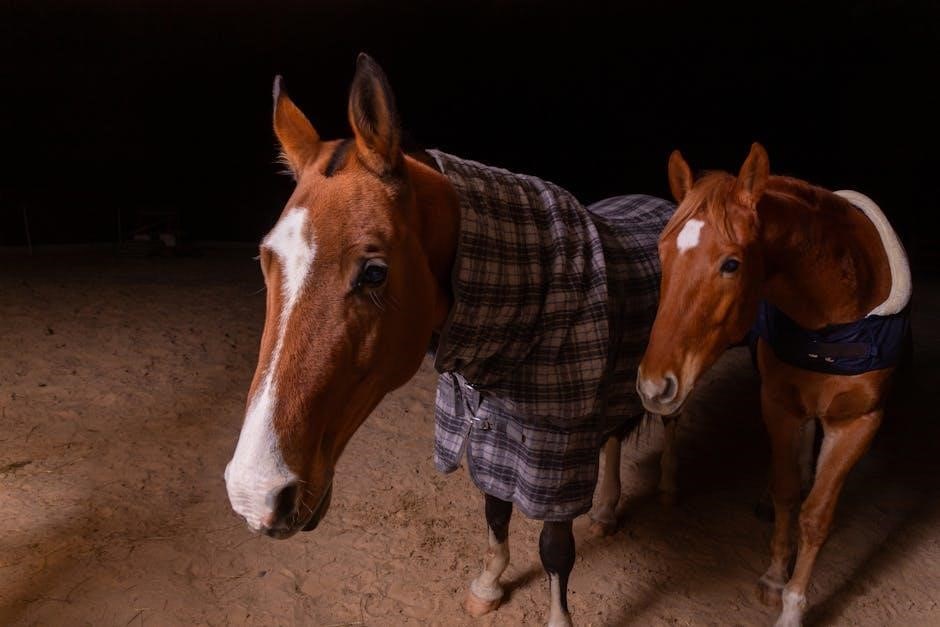
Blanket weight, measured in grams (g) or denier, indicates insulation levels; understanding these ratings is crucial for selecting appropriate protection against varying temperatures.
Understanding Denier Ratings
Denier refers to the fiber thickness of the blanket’s outer shell, impacting its durability and water resistance, not necessarily warmth. A higher denier indicates a tougher, more robust fabric, better suited for horses prone to ripping blankets or those living in harsh environments.
However, denier doesn’t directly correlate with a blanket’s insulating ability; that’s determined by the fill weight. While a 600D denier blanket is common, offering a good balance of durability and breathability, options range from lighter weights for milder climates to heavier weights for increased protection.
Consider your horse’s lifestyle and environment when choosing a denier rating. A horse kept in a sheltered stall may not require a high-denier blanket, while a horse turned out in a muddy paddock will benefit from a more durable, higher-denier option.
Lightweight Blankets (0-100g Fill)
Lightweight blankets, with a fill weight ranging from 0 to 100 grams, are ideal for transitional weather or horses who require minimal additional warmth. These blankets primarily offer a waterproof or windproof shell without significant insulation, serving as a protective layer against the elements rather than a substantial heat source.
They’re perfect for horses with thick winter coats who simply need protection from rain or snow, or for those transitioning between seasons when temperatures fluctuate. Often referred to as “sheets,” these blankets help keep the horse clean and dry while preventing coat dulling.
Consider a lightweight blanket when temperatures are consistently above freezing but wet or windy conditions prevail, providing comfort without overheating your horse.
Medium-Weight Blankets (100-200g Fill)
Medium-weight blankets, featuring a fill power between 100 and 200 grams, strike a balance between protection and breathability, making them versatile for a wider range of temperatures. These blankets are suitable for horses who need a moderate level of warmth during cooler days and nights, offering sufficient insulation without causing overheating.
They are an excellent choice for horses with average winter coats or those who are lightly clipped, providing protection from both cold and damp conditions. Medium-weight blankets are often used during the shoulder seasons – fall and spring – when temperatures can vary significantly.
They’re a good option when temperatures dip into the 30s and 40s Fahrenheit, offering a comfortable level of warmth for most horses.
Heavyweight Blankets (200g+ Fill)
Heavyweight blankets, characterized by a fill of 200 grams or more, are designed for the coldest temperatures and offer maximum warmth for horses. These blankets are essential for horses living in harsh winter climates, those with thin coats, or older horses who struggle to maintain body heat. They provide substantial insulation against freezing temperatures and biting winds.
Typically, these blankets are deployed when temperatures fall below freezing, offering crucial protection against hypothermia. They are also ideal for horses who are fully clipped, leaving them particularly vulnerable to the cold.
Selecting a heavyweight blanket ensures your horse remains comfortable and healthy even during the most severe winter weather conditions, preventing shivering and maintaining vital body functions.
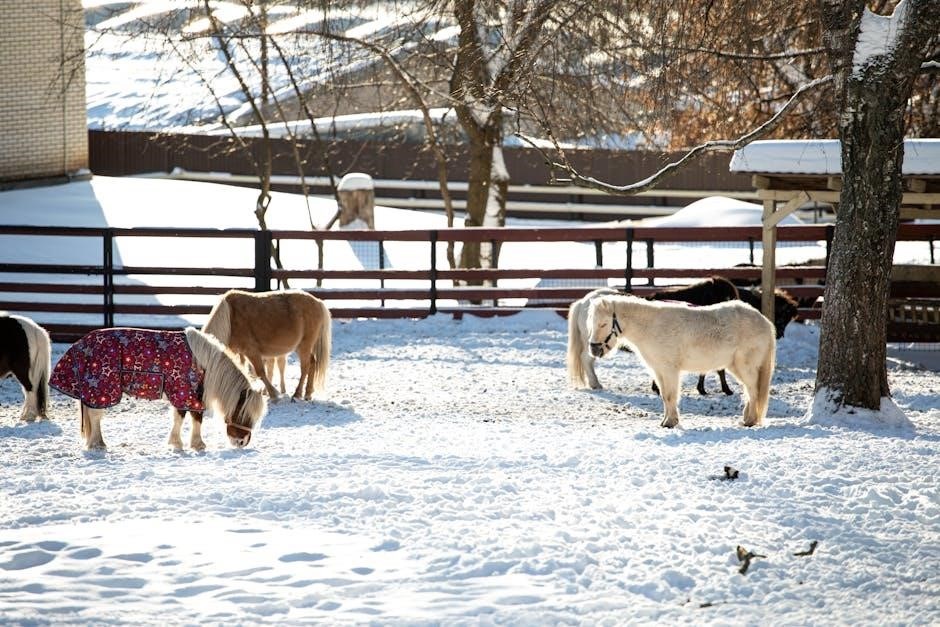
Temperature-Based Blanketing Chart
This chart correlates temperature with appropriate blanket weight, ranging from heavyweight below 40°F to no blanket above 60°F, ensuring equine thermal comfort.
Below 40°F: Heavyweight Blanket Recommended
When temperatures plummet below 40°F, a heavyweight blanket is strongly recommended for most horses, particularly those with thin coats, older horses, or those who are clipped. These blankets, typically 200g fill or higher, provide substantial insulation against the frigid conditions, helping your horse maintain a healthy core body temperature.
Consider the wind chill factor as well; even if the thermometer reads slightly above 40°F, a strong wind can make it feel much colder. Monitor your horse for signs of shivering, which indicates they are losing body heat. A properly fitted heavyweight blanket will help prevent this. Remember that individual horses have different tolerances, so observation is key.
Ensure the blanket is waterproof or water-resistant to protect against snow and sleet, which can quickly chill a horse.
40°F ⎻ 50°F: Medium to Heavyweight Blanket
Within the 40°F to 50°F range, a medium to heavyweight blanket is generally advisable, offering a balance between warmth and preventing overheating. Horses with a good winter coat may only require a medium-weight blanket (100-200g fill), while those with less natural insulation, or those who are worked and clipped, will benefit from a heavier option.
Pay close attention to your horse’s individual needs and activity level. A horse that is actively working will generate more body heat and may not need as heavy a blanket as one that is standing still. Monitor for signs of discomfort, such as sweating or shivering, and adjust accordingly.
Consider layering a lighter blanket with a waterproof sheet for added flexibility.
50°F ─ 55°F: Light to Medium Weight Blanket or Sheet
As temperatures hover between 50°F and 55°F, the decision to blanket becomes more nuanced, often leaning towards a light to medium-weight blanket or simply a sheet. Horses with a thick winter coat may not require a blanket at all, while those with less insulation or who are clipped may benefit from a lighter layer.
A sheet provides a breathable barrier against light rain or wind without adding significant warmth. If opting for a blanket, a light-weight option (0-100g fill) is usually sufficient. Continuously assess your horse for signs of being too warm or too cold, adjusting the blanket or sheet as needed.
This temperature range is a transition zone, demanding careful observation.
55°F ─ 60°F: Sheet or No Blanket
Within the 55°F to 60°F range, many horses will comfortably thrive without a blanket, particularly those with a fully developed winter coat. This is a crucial temperature zone for allowing the horse’s natural thermoregulation to function effectively. However, a sheet can still be beneficial, offering protection from light drizzle or pesky insects, especially during the evening hours.
Consider your horse’s individual needs; older horses or those with health conditions might appreciate a light layer even in these milder temperatures. Closely monitor for shivering or signs of discomfort. If your horse is clipped, a sheet is generally recommended.
This range encourages natural adaptation.
Above 60°F: Generally No Blanket Needed
When temperatures consistently rise above 60°F, most horses no longer require a blanket. Their natural cooling mechanisms, including sweating and vasodilation, are typically sufficient to maintain a comfortable body temperature. Over-blanketing in warmer weather can lead to overheating, discomfort, and even health issues.
It’s vital to prioritize allowing the horse to acclimate to the changing temperatures. Removing the blanket encourages the shedding of their winter coat and prepares them for warmer seasons. Always monitor your horse for signs of heat stress, such as excessive sweating or labored breathing.
Focus on providing ample shade and fresh water.
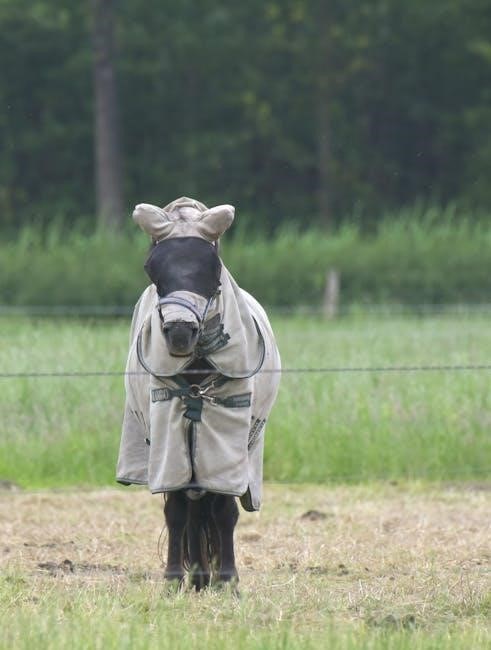
Measuring Your Horse for a Blanket
Accurate measurements—using a soft tape and ideally assistance—ensure a proper blanket fit, preventing rubs and maximizing comfort for your equine companion.
Essential Tools for Accurate Measurement
Before embarking on the blanket-sizing journey, gathering the right tools is paramount for precision. The most crucial item is a soft, flexible measuring tape – a tailor’s tape works wonderfully. Avoid rigid metal tapes, as they won’t conform to your horse’s body contours accurately.
Having a helper is highly recommended; a second person can ensure your horse stands still and square, facilitating a more reliable measurement. While not strictly essential, a notebook and pen are useful for recording the measurements immediately, preventing errors or the need to re-measure.
Ensure the measuring tape is clearly marked in inches or centimeters, depending on your preference. Finally, a calm and cooperative horse is the most important tool of all! A relaxed horse will stand quietly, allowing for accurate and stress-free measurements.
Step-by-Step Guide to Measuring
Begin by positioning your horse on level ground, encouraging them to stand as squarely as possible. With your helper’s assistance, locate the highest point of the shoulder – this is where the measurement begins; Run the measuring tape straight back to the point of the buttock, ensuring it follows a straight line over the horse’s back.
Avoid measuring down the leg or along the belly; the measurement should be a direct line over the topline. Record this length – it represents the blanket size. For additional accuracy, measure twice to confirm consistency.
Remember, blanket sizes are typically given in inches. Round up to the nearest inch if your measurement falls between sizes to ensure adequate coverage and comfort for your horse.
Ensuring a Proper Blanket Fit
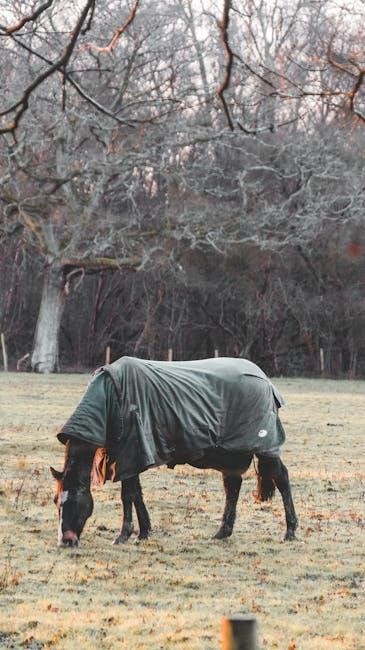
A well-fitting blanket is crucial for comfort and preventing rubs. The blanket should lie smoothly over the horse’s shoulders without pinching or pulling. Check for adequate coverage, extending sufficiently past the base of the tail. Ensure the chest straps aren’t overly tight, allowing for a few fingers’ width of space.
The front closure should fasten without strain, and the belly straps should be snug but not restrictive, permitting free movement. Regularly inspect for any signs of rubbing, particularly in the shoulder, chest, and tail areas.
Adjust straps as needed to maintain a secure, comfortable fit throughout the season, accommodating weight fluctuations or changes in coat thickness.
Blanketing Tips and Tricks
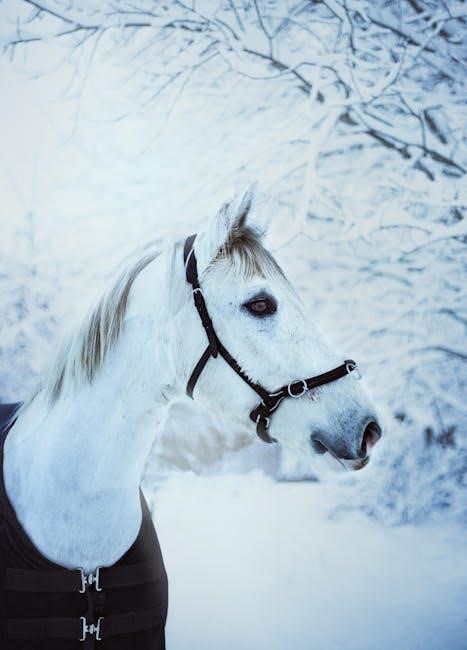
Layering blankets offers versatility, while waterproof options protect against wet conditions; routinely check for rubs and adjust the fit for optimal horse comfort.
Layering Blankets for Versatility
Employing a layering system with horse blankets provides exceptional flexibility in responding to fluctuating temperatures. Begin with a lightweight liner or sheet to wick away moisture and offer a base layer of warmth. Then, add medium-weight blankets as temperatures drop, and finally, incorporate a heavier waterproof outer layer for protection against rain, snow, and wind.
This approach allows you to easily adjust your horse’s blanket setup without needing a whole stable of different weights. You can add or remove layers as needed, ensuring your horse remains comfortable in varying conditions. Consider using a blanket extender to further customize the fit and warmth, especially for horses with unusual body shapes. Layering is a cost-effective and adaptable solution for maintaining optimal equine comfort throughout the season.
Waterproof vs. Water-Resistant Blankets
Understanding the difference between waterproof and water-resistant blankets is crucial for protecting your horse from the elements. Waterproof blankets feature a tightly woven fabric with a waterproof coating, preventing any moisture from penetrating. These are ideal for consistently wet climates or horses exposed to prolonged rain or snow.
Water-resistant blankets, conversely, offer a degree of protection against light rain and drizzle, but may become saturated in heavier downpours. They are often more breathable than waterproof options, reducing the risk of overheating. Consider your local climate and your horse’s turnout situation when choosing. A waterproof blanket is essential for consistently wet conditions, while a water-resistant blanket may suffice for milder, intermittent showers.
Checking for Rubs and Adjusting Fit
Regularly inspecting your horse’s blanket for rubs is vital for their comfort and health. Pay close attention to the shoulder, chest, and mane areas, as these are common friction points. Check daily during initial blanket use, then at least weekly thereafter. Look for hair loss, redness, or sores.
If rubs develop, adjust the blanket’s fit. Ensure it isn’t too tight, restricting movement, or too loose, allowing excessive shifting. Consider using a blanket liner to provide a smoother surface. Properly fitted blankets allow freedom of movement while providing adequate coverage. Don’t hesitate to consult with a blanket fitter if you’re unsure about achieving the correct fit for your horse, preventing discomfort and skin irritation.